
Roofing Costs in Tucker, GA
Roofing cost in Tucker depends on a handful of measurable things: how big your roof really is, how steep it is, what material goes on it, and what the crew finds once the old layers come off. This guide explains how roofing prices are built in 2026 so you can read a quote with confidence, compare options fairly, and decide whether repair or replacement makes more sense for your home or building.
- Service area
- Tucker, GA & nearby
- Phone
- (770) 874-7708
- Hours
- Monday - Sunday: 7AM - 7PM
- Estimates
- Free, no obligation
We are Northeast Atlanta Roofing, and we handle residential and commercial roofing in Tucker and nearby communities. We do not publish fixed prices because no two roofs are the same. Instead, we give every property owner a written quote after a free inspection. Use the sections below to understand what drives your number, then contact us for a quote based on your actual roof.
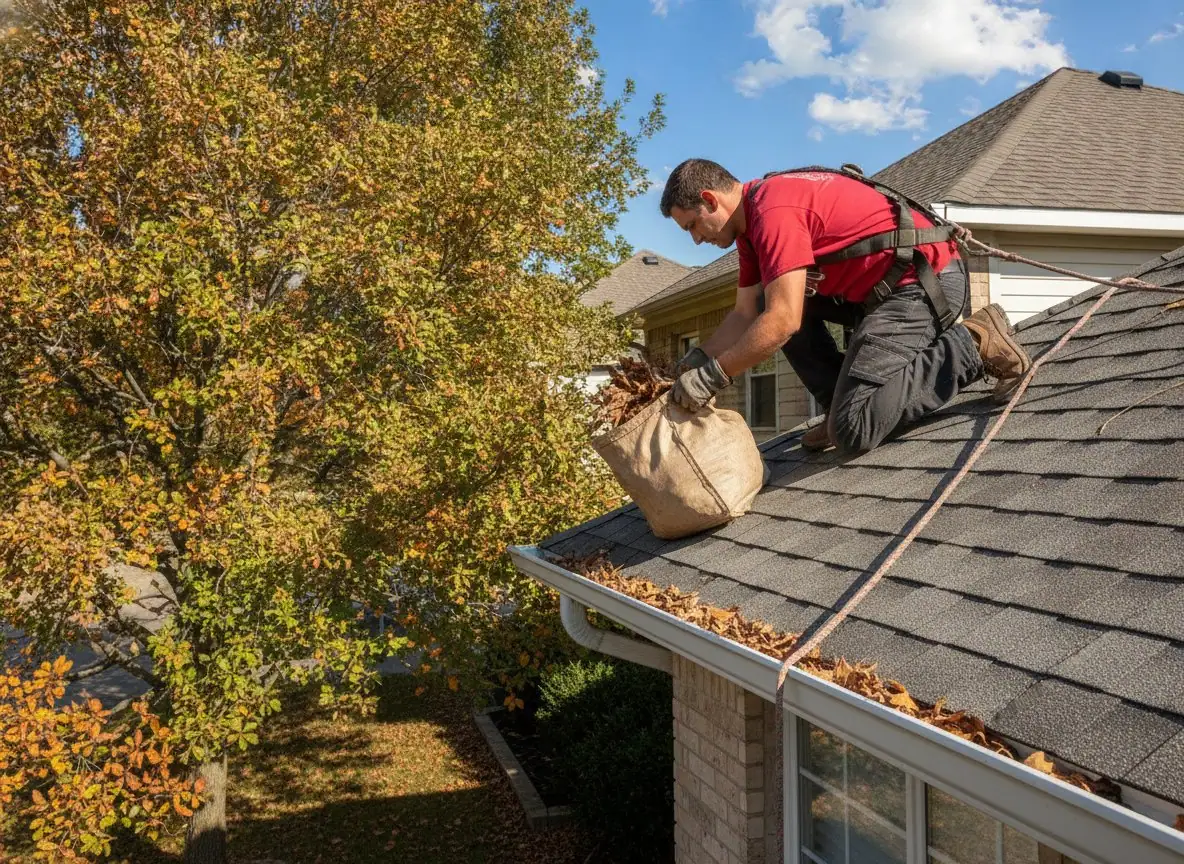
How much does a roof cost in Tucker, GA?
A roof in Tucker costs whatever its size, material, pitch, access and hidden condition add up to, so the only reliable figure is a written quote after someone has measured and inspected the roof. Published national and Atlanta-area averages cover a very wide band for full replacement. A small, simple asphalt roof sits at the low end, and a large, steep or complex roof in metal, tile or slate sits at the high end. Repairs run far less than replacement, and minor fixes such as a few blown-off shingles or a cracked pipe boot cost only a small fraction of a new roof.
In the Tucker area, several local conditions shape roofing prices:
- Housing stock. Many Tucker homes are 1960s to 1980s ranches and split-levels. Older homes are more likely to have two layers of shingles, plank decking or outdated flashing, and each of these adds labor.
- Trees. Mature oaks and pines are common across Tucker, Stone Mountain and Lilburn. Overhanging limbs can limit access, increase cleanup and leave debris that wears roofs faster.
- Weather. Spring and summer storms bring wind and hail. After a major storm, demand rises and schedules fill up, which can affect timing.
- Permits and code. Replacement work typically needs a permit from the City of Tucker or DeKalb County, depending on your address, and current code requirements can add items such as ice-and-water shield in valleys or updated drip edge.
Every one of these comes back to the same question of how the price per square foot is built, which is where most quotes start.
At a glance
What affects roofing cost per square foot?
Roofing cost per square foot is driven mainly by material, roof pitch, tear-off and disposal, decking repairs, flashing and underlayment, and local labor and permit requirements. Roofers usually price by the "square," which means 100 square feet of roof surface. Each factor below raises or lowers the cost per square.
| Cost factor | What it means | How it moves the price |
|---|---|---|
| Roof size (squares) | Actual roof surface area, not the home's floor area | More squares means more material, labor and disposal |
| Pitch (steepness) | How many inches the roof rises per foot | Steep roofs need harnesses, roof jacks and slower work, so labor goes up |
| Complexity | Valleys, hips, dormers, skylights, chimneys, multiple levels | More cuts, more flashing and more waste material |
| Material | 3-tab or architectural shingles, metal, wood, tile, slate | The largest single swing in price per square foot |
| Tear-off and disposal | Removing existing layers and hauling them away | Two layers cost more to remove than one, and dumpster and disposal fees apply |
| Decking condition | Plywood, OSB or plank boards under the shingles | Rotted or soft sections must be replaced, which is often found only after tear-off |
| Flashing and underlayment | Metal at walls, chimneys and valleys, plus the membrane under shingles | Replacing rusted flashing or upgrading underlayment adds material and labor |
| Ventilation | Ridge vents, soffit vents, attic fans | Correcting poor ventilation adds components but protects the new roof |
| Access | Driveway space, landscaping, trees, distance to the roof | Hard access slows loading and cleanup |
| Permits and labor rates | Local permit fees and metro Atlanta labor costs | Fixed costs that apply to most replacement jobs |
Of all these factors, the material you choose usually makes the biggest difference, so it is worth comparing options side by side.
Free, no-obligation estimates
Talk to Northeast Atlanta Roofing
Tell us what you need and we’ll take it from there.
At a glance
Roofing prices by material (shingles, metal, wood, tile and slate)
Asphalt shingles are the least expensive roofing material per square foot, metal and wood sit in the middle to upper range, and tile and slate cost the most because they are heavy and often need structural support. The table below shows general relative ranges and typical lifespans found across the industry. These are not Northeast Atlanta Roofing quotes. Your price depends on your roof and comes only from a written estimate.
| Material | General relative cost per sq ft (installed) | Typical lifespan | Notes for Tucker homes |
|---|---|---|---|
| 3-tab asphalt shingles | Lowest | Roughly 15–20 years | Lowest upfront cost and flat appearance. Lower wind resistance than architectural shingles. |
| Architectural (dimensional) shingles | Low to moderate, somewhat above 3-tab | Roughly 20–30 years | The most common choice in metro Atlanta. Thicker, better wind performance and more texture. |
| Metal (exposed fastener to standing seam) | Moderate to very high, a wide range | Roughly 40–70 years | Higher upfront cost and long service life. Standing seam is at the top of the range. |
| Wood shakes | Moderate to high | Roughly 20–30 years with upkeep | Needs regular maintenance in a humid climate. Check fire-rating needs. |
| Clay or concrete tile | High | Roughly 50 years or more | Heavy. The framing may need an engineering check or reinforcement. |
| Natural slate | Highest | Roughly 75 years or more | Very heavy and requires specialized installation and repair. |
Published Atlanta-area averages follow the same pattern. Shingle replacement sits well below metal, and the gap widens on larger or steeper roofs. A higher upfront price can still make sense if you plan to stay in the home for decades, because a longer-lasting roof is replaced less often. For a deeper look at full replacement pricing, see our page on roof replacement cost in Tucker. Material is only half of the equation, though. Size is the other half, so the next sections walk through two common home sizes.
At a glance
How much is a roof on a 2000 sq ft house?
A roof on a 2,000 sq ft house is priced on the roof's surface area, which is usually larger than 2,000 square feet for a one-story home and smaller for a two-story home. Here is why living space and roof area differ:
- Pitch adds area. A sloped roof covers more surface than the flat footprint under it. A moderate 6/12 pitch adds roughly 12% to the area, and steeper roofs add more.
- Overhangs add area. Eaves and rakes extend past the walls.
- Stories reduce area. A two-story 2,000 sq ft house has about a 1,000 sq ft footprint, so it needs a much smaller roof than a 2,000 sq ft ranch.
- Waste is added. Roofers order roughly 10–15% extra material for cuts, hips and valleys, and more on complex roofs.
| 2,000 sq ft home example | Approximate roof area | What drives the quote |
|---|---|---|
| One-story ranch, moderate pitch, simple gable | Roughly 2,300–2,700 sq ft (23–27 squares) | Material choice, number of layers to tear off, decking condition |
| One-story with hips, valleys and a steeper pitch | Roughly 2,600–3,000+ sq ft | Extra labor for pitch, more flashing and more waste |
| Two-story, simple design | Roughly 1,200–1,500 sq ft | Fewer squares, but height adds safety setup and access time |
The same logic applies to smaller homes, which are common in older Tucker and Clarkston neighborhoods.
How much does a 1500 sq ft roof cost?
A 1,500 sq ft roof, meaning 15 squares of actual roof surface, costs less in total than a larger roof, but the price per square can be slightly higher because fixed costs such as permits, delivery, dumpster and setup are spread over fewer squares. Keep a few points in mind:
- Check whether "1,500 sq ft" refers to the house or the roof. A 1,500 sq ft one-story home usually has around 1,700–2,000 sq ft of roof surface.
- The material comparison above still applies. Architectural shingles on a 15-square roof cost far less than metal or tile on the same roof.
- Smaller older homes often have plank decking or two shingle layers, which can raise the tear-off and decking portion of the bill.
- Chimneys and skylights add flashing work no matter how small the roof is.
Read moreShow less
We measure the roof, note the pitch and inspect the decking from the attic where possible, then put everything in a written quote. Once you have a number in hand, the natural next question is whether that number is reasonable.
Is $30,000 too much for a roof?
$30,000 is not automatically too much for a roof. It can be reasonable for a large, steep or complex roof, or for premium materials like standing seam metal, tile or slate. It would be high for a simple, average-size asphalt shingle roof. To judge any quote, check these points:
- Confirm the measurement. Ask how many squares are included and how waste was calculated.
- Check the material line. Make sure the quote names the shingle type (3-tab or architectural) or the metal panel type.
- Look at the scope. Does it include full tear-off, new underlayment, drip edge, flashing, pipe boots, ridge vent and cleanup?
- Find the decking terms. Look for a per-sheet price for replacing rotted decking so there are no surprises.
- Compare like with like. A lower bid that skips flashing replacement or uses lighter underlayment is not truly cheaper.
On a big multi-level home in Dunwoody or Johns Creek, or a metal roof anywhere, a figure in that range can be well justified. If your budget is far lower, you may be wondering how low a new roof can go.
Can I get a new roof for $5000?
A full new roof for $5,000 is uncommon in metro Atlanta in 2026. It is usually possible only on a very small, simple, low-pitch structure such as a shed, detached garage or small addition. For most homes, that budget is better suited to targeted repair work:
- Replacing damaged or missing shingles after a storm
- Resealing or replacing flashing at chimneys, walls and skylights
- Replacing cracked pipe boots, which are a frequent leak source
- Fixing a localized area of rotted decking
- Routine maintenance that extends the life of the roof you have
Be cautious with very low full-replacement bids. They often leave out tear-off, permits, new flashing or decking repairs, or they propose overlaying new shingles on old ones. Our roof repair service page explains what repairs typically involve. Choosing between a repair and a replacement often comes down to how much of the roof is affected, which is what the 25% rule is about.
At a glance
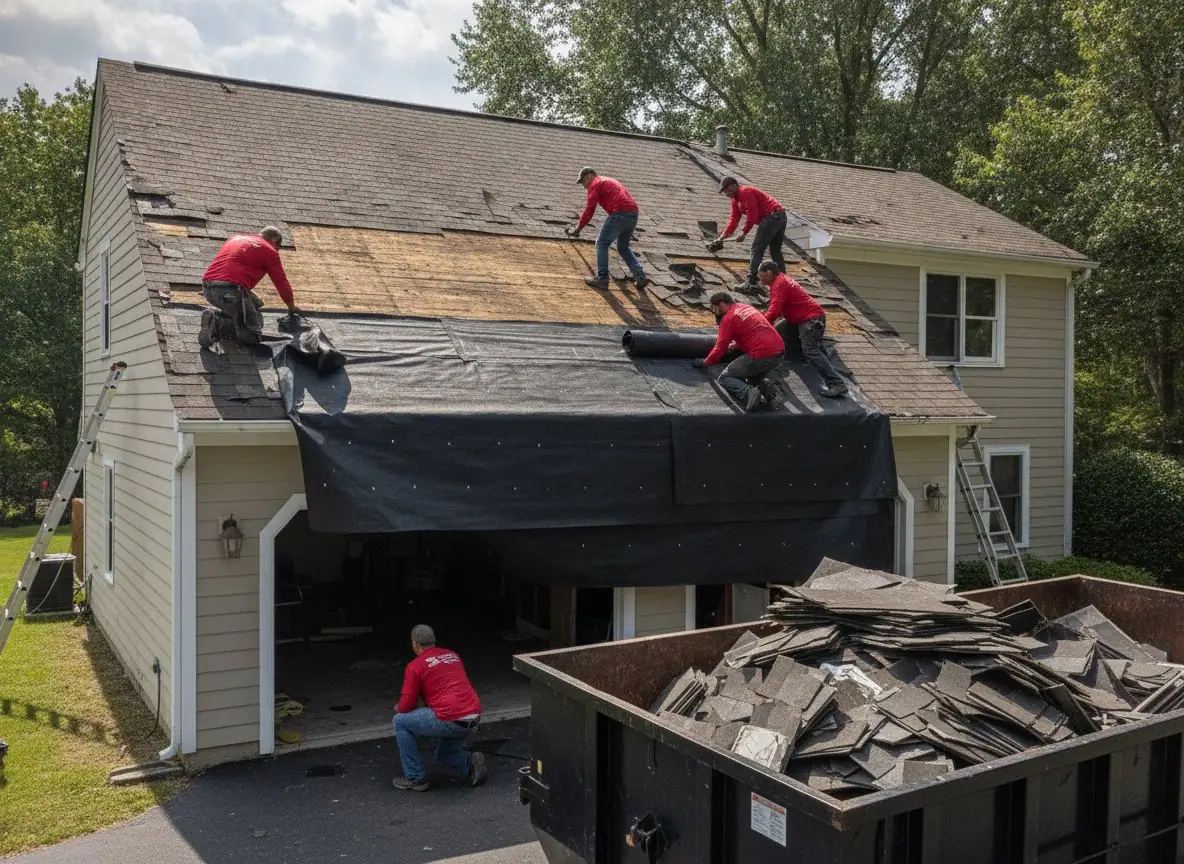
What is the 25% rule for roofing?
The 25% rule is a common rule of thumb: if more than about 25% of a roof is damaged or needs repair, replacing the whole roof usually makes more sense than patching it. The term also refers to building code provisions in some states, Florida being the best known, that require a full roof to meet current code once more than 25% of it is repaired or replaced within a 12-month period. Georgia does not apply that rule in the same way. Code requirements for your property come from your local permitting office, either the City of Tucker or DeKalb County, so ask your roofer how local code applies to your project.
As a planning tool, the rule works because:
- Large patches rarely match the color and wear of older shingles.
- Widespread damage usually means the rest of the roof is near the end of its life too.
- Repeated large repairs can add up to a large share of a replacement cost without resetting the roof's lifespan.
Repair or replace: a quick decision guide
| Repair usually makes sense when | Replacement usually makes sense when |
|---|---|
| Damage is limited to one area or well under a quarter of the roof | Damage or wear covers roughly 25% or more of the roof |
| The roof is well within its expected lifespan | Shingles are near or past their expected life (curling, granule loss, bald spots) |
| The leak comes from a specific point such as flashing or a pipe boot | There are multiple leaks or the decking feels soft in several places |
| Decking is solid | The roof already has two layers or has been patched repeatedly |
If the answer points toward replacement but the budget is not there yet, you still have practical options.
What do you do if you can't afford a new roof?
If you can't afford a new roof right now, stop active leaks with targeted repairs, check whether insurance covers storm damage, and look at financing to spread the cost over time. A step-by-step approach:
- Get an inspection. Find out exactly what is failing. Sometimes a focused repair buys several more years.
- Prioritize water entry. Fix leaks first, because water damage to decking, insulation and ceilings raises the eventual cost.
- Check for storm damage. Wind and hail damage may be covered by homeowners insurance, even on a roof you thought was simply worn out.
- Ask about financing. Monthly payments can make a replacement possible now, before more damage occurs.
- Choose material strategically. Architectural shingles offer solid value for most Tucker homes if premium materials are out of reach.
- Keep up maintenance. Clearing debris and gutters and sealing small gaps slows wear.
Read moreShow less
Financing and insurance claim help: Northeast Atlanta Roofing offers financing for qualifying roofing projects, and we help homeowners with insurance claims. That includes documenting storm damage during our free inspection and walking you through what your adjuster will need to see. Ask about both when you schedule.
Whichever path you take, the quality of the quote you get matters as much as the price on it.
How do you choose a roofing company and get an accurate quote in Tucker?
Choose a roofing company that inspects the roof in person, puts the full scope in writing and can show it is insured and properly permitted for the work. Then compare quotes line by line rather than by the bottom number alone. To get an accurate quote:
- Share the basics up front. Give your home's square footage, number of stories, preferred material and whether you think you need repair or replacement.
- Insist on an in-person inspection. Satellite measurements help, but decking, flashing and ventilation problems show up only on site and in the attic.
- Get it in writing. The quote should list materials, squares, tear-off, underlayment, flashing, ventilation, decking terms, permits and cleanup.
- Ask about insurance and permits. Confirm the company is insured and will pull the required permit.
- Ask about emergencies. Storm damage does not wait, so it helps to work with a company that offers 24/7 emergency roofing.
Read moreShow less
We provide free inspections and written estimates across Tucker, Decatur, Lilburn, Stone Mountain, Chamblee, Doraville, Norcross, Peachtree Corners, Dunwoody, Brookhaven, Sandy Springs, Roswell, Johns Creek, Lawrenceville, Snellville, Clarkston and Scottdale, for both homes and commercial buildings. Learn more about our roofing services in Tucker, including roof replacement and roof installation. To request your estimate, use the free estimate form on this page or our contact page, or call (770) 874-7708. The questions below cover what homeowners ask most often once they start comparing quotes.
FAQ
Frequently asked questions
How much does roof replacement cost per square foot in Georgia?
Roof replacement cost per square foot in Georgia depends mostly on material. Asphalt shingles are the lowest, metal and wood fall in the middle to high range, and tile and slate are the highest. Pitch, tear-off layers, decking repairs and permits then raise or lower that base. We provide a written per-project quote after a free inspection. Our roof replacement cost in Tucker page explains the breakdown in more detail.
Does a steep roof cost more to replace?
Yes. Steep roofs have more surface area for the same footprint, and they require safety equipment, roof jacks and slower, more careful work. Very steep or multi-story roofs also take more time for material handling and cleanup.
What is included in a roofing quote?
A complete roofing quote should list the roof size in squares, the material and product type, tear-off and disposal, underlayment, drip edge, flashing, pipe boots, ventilation, the per-sheet price for any decking replacement, permits and cleanup. If an item is missing, ask whether it is included before you compare prices.
Does homeowners insurance pay for a new roof?
Homeowners insurance often pays for roof damage caused by sudden events such as wind, hail or falling trees, minus your deductible. It typically does not pay for normal wear and age. Coverage terms vary by policy, including whether the roof is paid at actual cash value or replacement cost. We help homeowners with insurance claims by documenting damage and explaining the process.
Is it cheaper to repair or replace a roof?
Repair is cheaper upfront when damage is limited and the roof has life left. When damage covers roughly a quarter or more of the roof, the shingles are near the end of their lifespan, or leaks keep returning, replacement is usually the better value over time. See our roof repair page for common repair scenarios.
Does Northeast Atlanta Roofing offer financing?
Yes. Financing is available so you can spread the cost of your roofing project over time. Ask about it when you schedule your free inspection and we will explain the options.
Last reviewed: 2026. General cost information on this page is for planning only and is not a quote from Northeast Atlanta Roofing.
For a written quote based on your actual roof, call Northeast Atlanta Roofing at (770) 874-7708 to schedule a free inspection.
Why choose us
Why choose Northeast Atlanta Roofing?
Free estimates
Get a clear, no-obligation estimate before any work begins.
Licensed & insured
Your property and our crew are protected on every project.
Residential & commercial
One team for homes, multi-family and commercial properties.
Locally owned & operated
A local team serving your community and the surrounding area.
Get in touch
Find roofing help near you
Request a free estimate online or give us a call — our team will follow up quickly.
- Call us(770) 874-7708
- Visit4121 Lawrenceville Hwy suite d-4, Tucker, GA 30084
- HoursMonday - Sunday: 7AM - 7PM