
Roof Installation in Tucker, GA
Roof installation is the full process of building a new roofing system on a home or commercial building, from the deck and underlayment to the shingles, flashing, ventilation and ridge caps. Northeast Atlanta Roofing handles new roof installation in Tucker, GA and nearby communities for homeowners, builders and property managers. This page covers how a new roof is built, which materials fit Georgia's heat and storms, how long the work takes, and what drives the cost.
- Service area
- Tucker, GA & nearby
- Phone
- (770) 874-7708
- Hours
- Monday - Sunday: 7AM - 7PM
- Estimates
- Free, no obligation
If you are comparing local roof installation contractors or getting ready for a new roof, use this guide to plan your project. When you are ready, request a free inspection and written estimate.
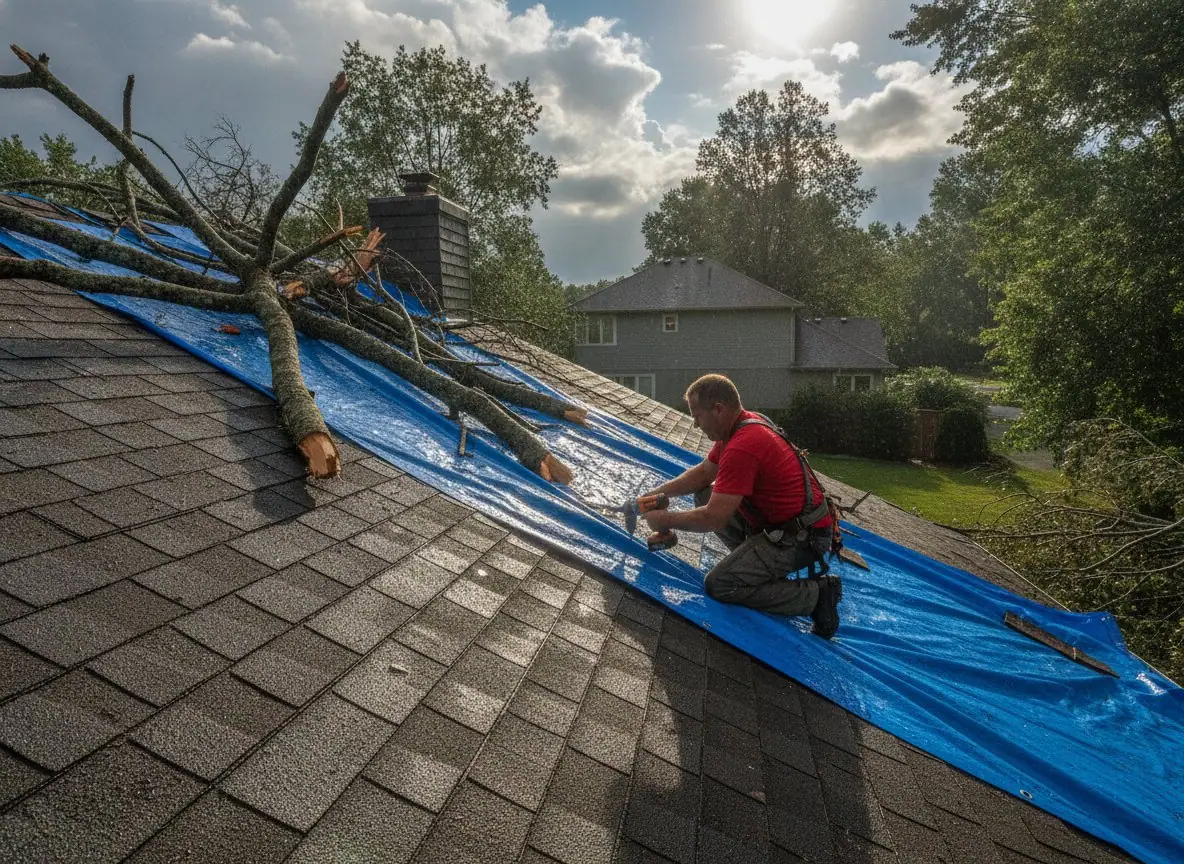
What is new roof installation?
New roof installation is putting a complete roofing system on a structure. That can be new roof construction on a home that is being built, or a full system installed after the old roof is removed. A finished installation has several layers that work together:
- Roof deck: plywood or OSB sheathing fastened to the rafters or trusses.
- Underlayment: a water-resistant layer over the deck, with ice-and-water membrane in valleys and around penetrations.
- Drip edge and flashing: metal that guides water away from edges, walls, chimneys and vents.
- Roof covering: asphalt shingles, metal panels or a low-slope membrane.
- Ventilation: intake at the soffits and exhaust at the ridge, so the attic stays cooler and drier.
- Hip and ridge caps: finishing pieces that seal the peaks.
Read moreShow less
Installation describes the build itself. Re-roofing an existing home is usually called roof replacement in Tucker, but the steps after tear-off are the same. Knowing what a full system includes helps you judge when your current roof can no longer be fixed.
When do you need a new roof installed?
You need a new roof installed when repairs no longer stop leaks, when the materials have reached the end of their service life, or when you are building or adding onto a structure. Common signs:
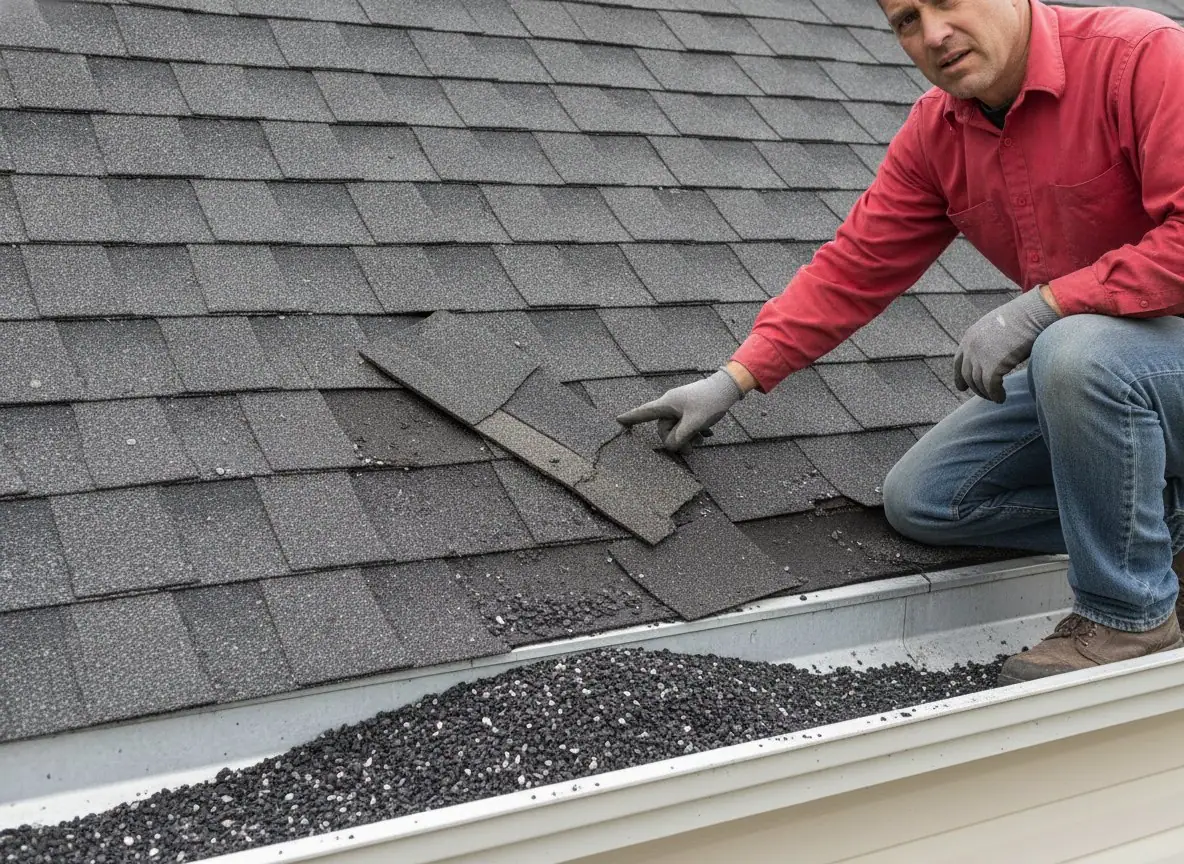
- Shingles that are curling, cracked, missing or losing granules, with granules collecting in the gutters.
- Repeated leaks in different spots, or water stains on ceilings and attic sheathing.
- A sagging roofline or soft decking underfoot, which point to rot.
- Widespread hail or wind damage after a storm.
- An asphalt roof roughly 20 years old or older. Georgia heat tends to age shingles faster.
If damage is limited to one area, roof repair may be enough. For active leaks after a storm, our emergency roofing crew is available 24/7. Once a new roof is the right call, the next step is understanding how one is built.
Free, no-obligation estimates
Talk to Northeast Atlanta Roofing
Tell us what you need and we’ll take it from there.
What are the steps involved in constructing a roof?
Roof construction follows a fixed order: inspect, prepare, remove the old material, repair the deck, waterproof, install the covering, and then finish and clean up.
- Free inspection and written estimate: we measure the roof, check the decking and ventilation, and document any damage.
- Permits and material delivery: local permit requirements are confirmed and materials are scheduled for delivery.
- Site protection: tarps go over landscaping, and a dumpster is placed for debris.
- Tear-off: old shingles, underlayment and worn flashing are stripped down to the deck.
- Deck repair: rotted or delaminated sheathing is replaced, and loose boards are re-nailed.
- Drip edge and underlayment: drip edge goes on the eaves, followed by underlayment, ice-and-water membrane in valleys and at penetrations, then drip edge on the rakes.
- Starter strip and field shingles: the shingles are installed in courses from the eave up to the ridge.
- Flashing: step, counter and pipe-boot flashing are installed at walls, chimneys and vents.
- Ventilation and ridge cap installation: the ridge vent is cut in, then hip and ridge shingles are installed.
- Cleanup and final walk-through: a magnetic sweep picks up nails, and the finished roof is inspected.
Step seven depends on which covering you choose, so the next question is which materials make sense for your building.
At a glance
What roofing materials can we install?
We install asphalt shingle roofs, metal roofs and low-slope systems for residential and commercial buildings. The right choice depends on your budget, the roof pitch and how long you plan to own the property.
| Material | Typical lifespan | Best for | National installed range (general reference) |
|---|---|---|---|
| 3-tab asphalt shingles | 15–20 years | Tight budgets, rentals | About $3–$5 per sq ft |
| Architectural asphalt shingles | 25–30 years | Most Tucker homes, better wind resistance | |
| Metal (standing seam or panel) | 40–70 years | Long ownership, low-slope sections, energy savings | About $5–$16 per sq ft |
| Tile | 50+ years | Heavy-duty structures built to carry the weight | About $7–$25 per sq ft |
| Flat/low-slope membrane | 20–30 years | Commercial buildings, porches, additions | Varies by system |
The price ranges above are general national figures, not local quotes. For details, see asphalt shingle types and brands, our metal roof installation page, and flat roof installation. Heavier materials also put more demands on the deck underneath, which brings up a common question about sheathing thickness.
Should I use 1/2 or 3/4 plywood for roofing?
For most shingle roofs with rafters or trusses spaced 24 inches on center, 1/2-inch plywood (or 7/16-inch OSB) is the standard and meets typical code requirements. Use thicker 5/8-inch or 3/4-inch sheathing when:
- Rafters are spaced wider than 24 inches.
- The roof will carry heavy materials such as tile.
- You want a stiffer deck that resists sagging between framing members.
- Older plank decking is being re-sheathed and extra rigidity helps.
Thicker decking adds material cost and weight, so for a standard asphalt roof 3/4-inch is usually more than you need. Panels should be installed with H-clips or a 1/8-inch gap between them so they can expand in Georgia humidity, and fastened on the schedule the manufacturer specifies. With a sound deck in place, the shingles go on next.
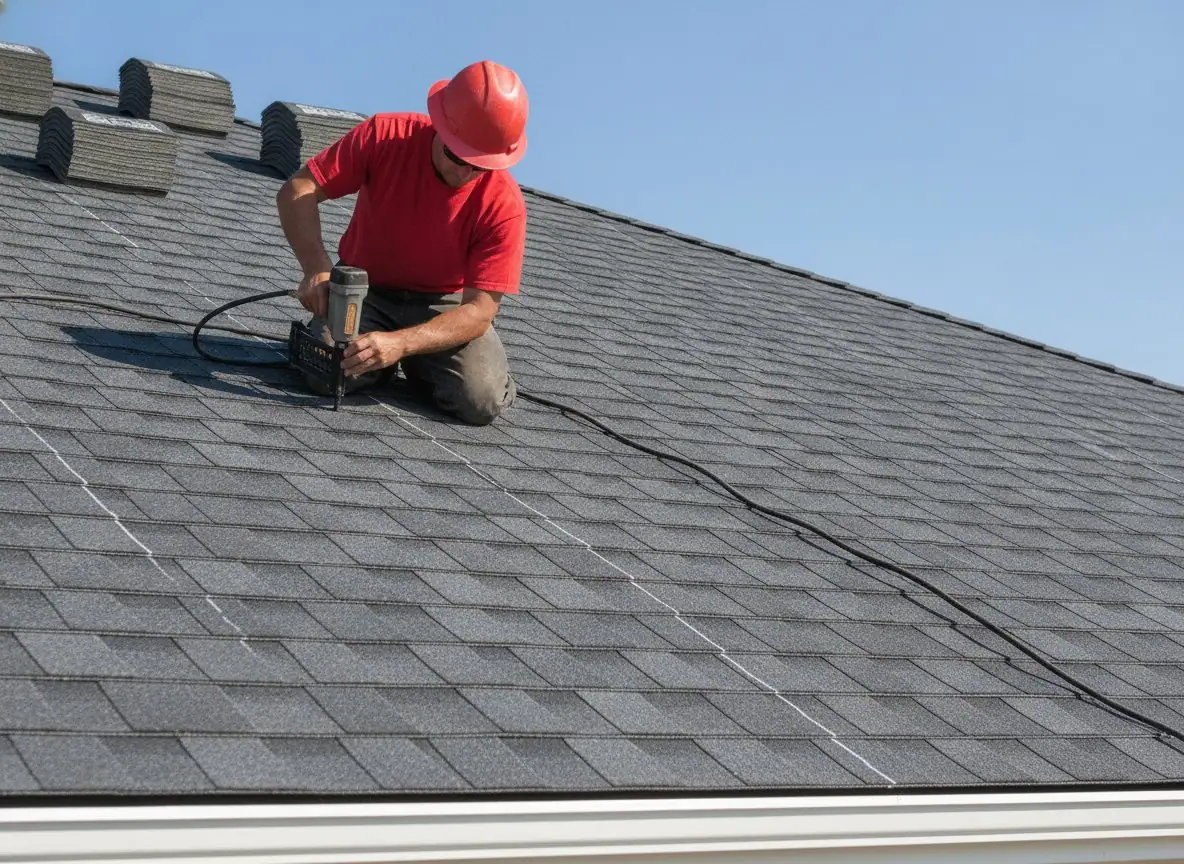
How are asphalt shingles, ridge caps and hip shingles installed?
Asphalt shingle installation starts with a starter strip at the eave. Each course is then nailed in the manufacturer's nailing zone and offset from the course below, working up to the ridge. Key details:
- Nailing: four nails per shingle is standard, and six nails are used in high-wind applications. Nails should sit flush, not overdriven.
- Offsets: 3-tab shingles installation uses a 6-inch offset so seams never line up. Architectural shingles follow the manufacturer's random or set offset.
- Valleys: open metal or closed-cut valleys go over ice-and-water membrane.
- Hip and ridge shingles: once the field is complete and the ridge vent is cut, hip and ridge shingles are bent over the peak and fastened with two nails each. Each cap overlaps the previous one so the nails are covered. On hips, caps run from the bottom up. On ridges, they run in the direction away from prevailing wind.
- Ridge cap material: on 3-tab roofs, caps can be cut from the shingles themselves. Architectural roofs need dedicated ridge cap shingles for proper thickness and sealing.
Sloppy ridge cap installation is a common source of wind blow-offs and leaks, so it deserves the same care as the field shingles. Doing each step in order is also what sets the schedule.
How long does roof installation take?
Most single-family roofs under 3,000 square feet take 1 to 2 days to install. Steep, complex or larger roofs take longer.
Timeline at a glance
- Inspection and estimate: one visit.
- Permit and material delivery: depends on permit processing and supplier timing.
- Tear-off and deck repair: usually the first day.
- Underlayment, shingles, flashing and caps: day one or two.
- Add time for: steep pitches, multiple stories, extensive deck rot, metal or low-slope systems, and rain delays.
Labor hours are a major part of the price, which leads to the cost question.
At a glance
How much does roof installation cost in Tucker, GA?
The cost of roof installation in Tucker depends on the size, pitch and condition of your specific roof. We provide a written quote after a free inspection. As a general national reference, published estimates put roof installation or replacement at about $3 to $6 per square foot, or roughly $5,700 to $16,000 overall. Your real number can fall outside that range.
| Cost factor | How it affects price |
|---|---|
| Roof size | Priced by the square (100 sq ft). More squares means more material and labor. |
| Material | 3-tab costs the least, then architectural shingles, then metal and tile. |
| Pitch and access | Steep or multi-story roofs require safety gear and slower work. |
| Tear-off vs overlay | Removing layers adds labor and disposal. Overlays skip that cost but hide the deck. |
| Deck damage | Rotted sheathing is replaced per sheet. |
| Complexity | Valleys, dormers, skylights and chimneys add flashing work. |
| Permits and disposal | Permit fees and dumpster costs vary by jurisdiction. |
For a deeper breakdown, see our roof installation and shingle cost guide, the roof replacement cost page, or all cost guides. Labor is often the largest single line on the estimate.
What is the labor cost to install a roof?
Labor typically makes up about 40–60% of a roof's total cost. National figures cite roughly $150 to $300 per square, or about $3,000 to $6,000 for a 2,000 sq ft roof. These are general ranges. Local labor depends on pitch, height, tear-off layers, roof complexity and the season. Labor covers tear-off, deck repair, underlayment, shingle installation, flashing, ventilation and cleanup. A low labor bid usually means some of those steps are being shortened. The labor figure also depends on how much roof area you actually have, which brings up a common sizing question.
How much does it cost to re-roof a 2000 sq ft house?
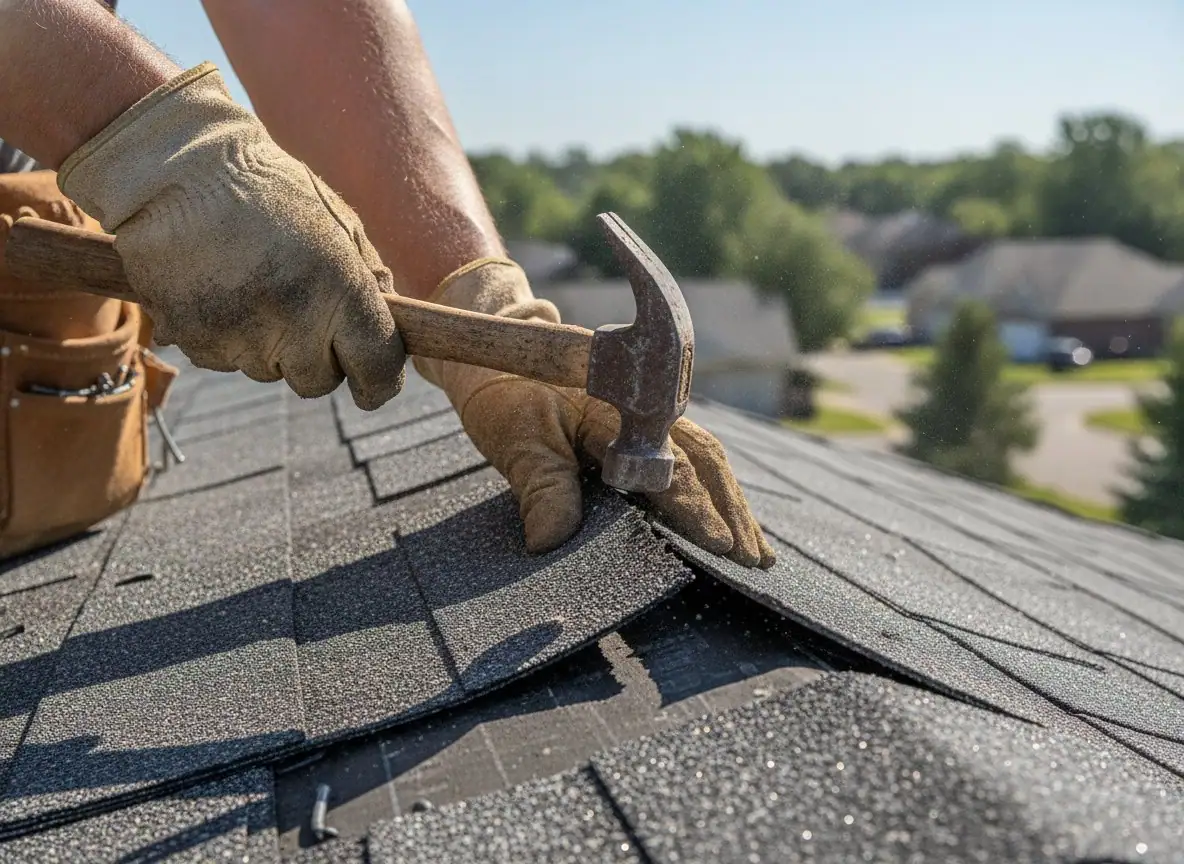
Re-roofing a 2,000 sq ft house usually involves more than 2,000 sq ft of roof, because pitch and overhangs add area. The final cost depends on that measured roof area and the factors in the table above. A 2,000 sq ft home often has 22 to 30 squares of roof surface, and steeper roofs add more. Applying the national per-square-foot reference to the measured area gives a rough idea, but tear-off layers, deck repair and material choice can move the number significantly. A measured inspection is the only reliable way to price it. Sometimes the inspection also shows that partial repairs are no longer allowed, which is where the 25% rule comes in.
What is the 25% rule for roofing?
The 25% rule is a building code guideline that has been widely adopted. It says that if more than 25% of a roof, or of a roof section, is repaired or replaced within a 12-month period, the whole roof or section must be brought up to current code. In practice that can mean full replacement. Recent code editions have changed how this applies, and local adoption varies, so check the current requirements for your property. The rule matters in two situations:
- Repair vs replace: large storm-damage repairs may trigger a full re-roof.
- Insurance: code-upgrade coverage on your policy may affect what an insurer pays.
Because the rule can turn a repair into a full project, some contractors use it to push unnecessary replacements. That makes it worth knowing the warning signs before you hire anyone.
What are the red flags to watch for when hiring a roofer?
The biggest red flags are pressure tactics, vague paperwork and requests for large payments upfront. Use this checklist:
- Shows up uninvited after a storm and pushes you to sign that day.
- Cannot provide proof of insurance.
- Gives a verbal price with no written, itemized estimate.
- Asks for full or very large payment before materials arrive.
- Offers to "cover" or waive your insurance deductible, which can amount to insurance fraud.
- Has no local address or phone number.
- Will not explain the underlayment, flashing or ventilation plan.
- Recommends replacement without showing you photos of the damage.
Storm-related projects bring their own concerns, especially around insurance and payment.
Insurance and financing for a new roof
If storm damage led to your new roof, your homeowner's policy may cover part of the cost. We help homeowners with the insurance claim process. We also offer financing so you do not have to delay a needed roof.
Insurance and financing help: after hail or wind, we inspect and document the damage with photos, which you can use in your claim. We can explain the scope to your adjuster and walk you through financing options on the same visit. For active leaks, our 24/7 emergency service can tarp the roof first to prevent further interior damage.
With coverage and payment sorted out, the final decision is which contractor to trust with the work.
How to choose a roof installation company
Choose a roof installation contractor that gives you a written, itemized estimate, carries insurance, explains its installation method and serves your area locally. When comparing companies:
- Compare estimates line by line: material, underlayment, flashing, ventilation, deck repair allowance and disposal.
- Ask how ridge caps, valleys and pipe boots will be handled.
- Confirm who pulls the permit and who inspects the finished work.
- Ask for warranty terms in writing, covering both manufacturer and workmanship.
- Prefer a local roof installation company that can return quickly if anything needs attention.
Northeast Atlanta Roofing is based in Tucker and provides residential and commercial roof installation, replacement, repair, inspection, maintenance and emergency roofing. You can learn more about us or browse all roofing services. The simplest next step is a free estimate.
Request your free installation estimate
Call (770) 874-7708 or use the free estimate form on this page to schedule an inspection. You can also reach us through our contact page. We will measure your roof, check the deck and ventilation, and give you a written quote. We serve:
- Tucker
- Decatur
- Lilburn
- Roswell
- Chamblee
- Dunwoody
- Norcross
- Clarkston
- Doraville
- Scottdale
- Brookhaven
- Snellville
- Johns Creek
- Lawrenceville
- Sandy Springs
- Stone Mountain
- Peachtree Corners
FAQ
Frequently asked questions
Can you install a new roof over an old one?
Codes often allow one overlay layer of asphalt shingles on a sound, flat roof. However, an overlay hides deck damage, adds weight and can affect manufacturer warranty terms. In most cases a full tear-off is the better choice because the deck can be inspected and repaired.
Do I need a permit for a new roof in Tucker?
A full re-roof or new roof typically requires a building permit. Requirements depend on whether the property is inside Tucker city limits or in another jurisdiction. We will go over what applies to your property during the free estimate.
What is the difference between roof installation and roof replacement?
Roof installation refers to building a roofing system, including on new construction or additions. Roof replacement means removing an existing roof and installing a new one. After tear-off, the installation steps are the same.
What type of underlayment do you use?
Most shingle roofs today use synthetic underlayment across the deck, with self-adhering ice-and-water membrane in valleys, at penetrations and along vulnerable edges. Your written estimate specifies the underlayment for your project so you can compare bids directly.
Do you offer financing for new roofs?
Yes. Financing is available for new roof installation, and we can review the options with you during your free estimate.
What warranty comes with a new roof installation?
Roofing materials generally carry manufacturer warranties, and the terms vary by product and by installation method. Ask any contractor for both material and workmanship warranty terms in writing. We will review what applies to your specific project when we provide your estimate.
Ready to plan your new roof? Call Northeast Atlanta Roofing at (770) 874-7708 for a free inspection.
Why choose us
Why choose Northeast Atlanta Roofing?
Free estimates
Get a clear, no-obligation estimate before any work begins.
Licensed & insured
Your property and our crew are protected on every project.
Residential & commercial
One team for homes, multi-family and commercial properties.
Locally owned & operated
A local team serving your community and the surrounding area.
Get in touch
Find roofing help near you
Request a free estimate online or give us a call — our team will follow up quickly.
- Call us(770) 874-7708
- Visit4121 Lawrenceville Hwy suite d-4, Tucker, GA 30084
- HoursMonday - Sunday: 7AM - 7PM